

What Stays With the House When You Sell in Mississippi?
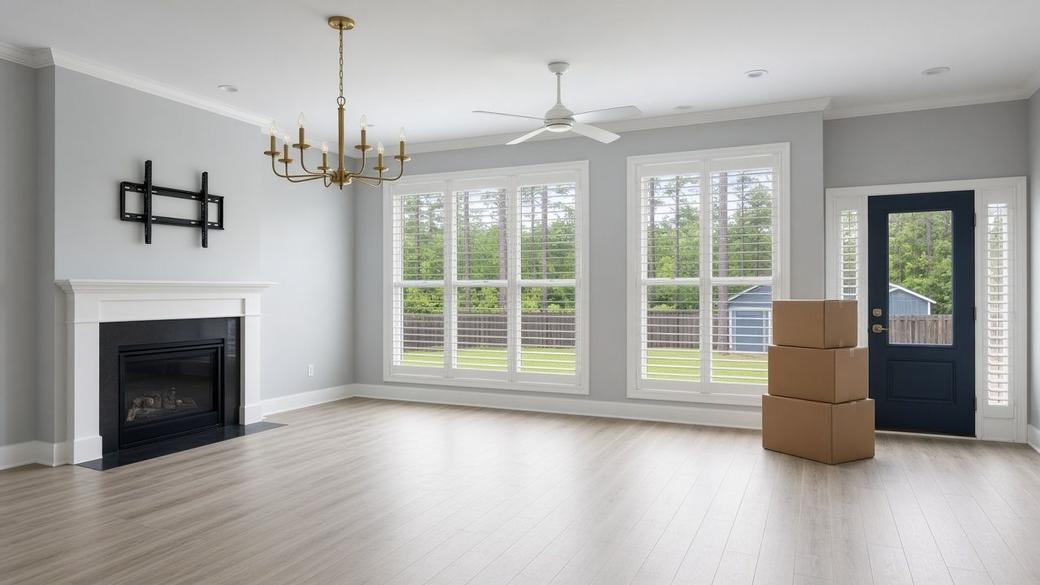
What stays with the house when you sell in Mississippi?
Under the standard Mississippi REALTORS® F1 purchase contract (Rev. 10/2026), items permanently attached to the home stay unless they are specifically excluded, and the form names things like built-in appliances, ceiling fans, blinds and rods, lighting fixtures, installed smart home devices, fences, and even pet fence collars. TVs, furniture, washers, and dryers are not on that list, drapes are excluded unless their box is marked, and the kitchen refrigerator gets its own checkbox. Sellers should swap out or exclude what they plan to keep before listing photos, and buyers should write wanted items into the offer and confirm them at the final walk-through. This is general information, not legal advice, and your own signed contract controls, so ask your closing attorney about your specific deal.
Every seller has one. The chandelier from Grandma's dining room, the TV that cost more than the couch, or the doorbell camera that knows the dog by name. Every buyer has one too: the thing they saw in the listing photos and assumed came with the house.
What stays with the house is one of the questions I get most, from sellers getting ready to list and from buyers getting ready to write an offer, everywhere from Brandon, Flowood, and Pearl to Madison and Ridgeland. It's all over Reddit, too, usually from a buyer who found empty ceiling boxes at the final walk-through (in one thread, a missing smart toilet). Here's how the Mississippi contract handles it.
What the Mississippi F1 Contract Says Stays
When a REALTOR® is involved in a home sale in Rankin and Madison Counties, the purchase contract is usually the Mississippi REALTORS® F1 Contract for the Sale and Purchase of Real Estate. In the current version, updated in 2026 (Rev. 10/2026), Section 2 says the property comes with a long list of items presently located there, “at no additional value.” Here's that list in plain English:
- Inside: all built-in appliances, installed smart home systems and peripheral devices, ceiling fans, plumbing and heating and air equipment (including window units), water heaters, stationary laundry tubs, central vacuum systems, carpet, and bathroom fixtures and mirrors.
- Windows and doors: doors, windows, storm doors and windows, awnings, and permanently affixed window treatments and their associated hardware, which the 2026 form spells out as rods, cornice boards, shutters, blinds, and shades. Drapes are specifically excluded unless a separate Drapes box is marked.
- Lighting and fireplaces: lighting fixtures and their shades, gas logs, and fireplace doors and screens.
- Safety and access: security system components, smoke detectors, garage door openers, and keys to every door with a keyed lock or deadbolt.
- Outside: landscaping, fences, gates, outdoor lighting, mailboxes, swimming pools and equipment, antennae and satellite dishes (excluding proprietary components), water pumps and pressure tanks, permanently installed playground equipment, and permanently installed cooking grills.
- And yes, the dog's stuff: permanently installed pet fences and equipment, including the collars.
Then comes the catch-all that settles a lot of arguments: “all other personal property items permanently attached in any manner unless specifically excluded herein.” In plain terms, if it's attached and nobody excluded it in writing, the form treats it as part of the sale.
Right below that list sits a separate checkbox: the kitchen refrigerator will or will not remain with the property. It's one of the easiest boxes to skip, so check it on purpose. The 2026 form adds a second box to watch inside the window treatment line: drapes stay only if the box saying they “will remain with Property, at no additional value” is marked.
What the form doesn't name
Washers, dryers, TVs, furniture, rugs, potted plants, and freestanding refrigerators outside the kitchen aren't on the F1 list, so plan on them leaving with the seller unless your contract says otherwise. Drapes are named only to be excluded, so they leave too unless the Drapes box is marked. For the in-between items, Realtor.com describes a common rule of thumb: if you need tools to remove it, it's probably a fixture, and when in doubt, the purchase agreement decides.
One more contract point matters. According to Section 9(A) of the F1, the contract is the entire agreement, and neither party is bound by oral statements not in it. So “we'll leave the playset” at a showing doesn't count, and neither party should rely on the MLS remarks alone. Every inclusion and exclusion belongs in the contract itself, usually in Section 11 (Special Provisions) or an addendum.
Sellers: Decide What Goes Before the Listing Photos
Here's what I tell every seller: if you're keeping it, take it down or put it in writing before the photographer shows up. Buyers fall for what they see in the photos, and a light fixture that appears in 25 pictures and is gone at the walk-through is how a smooth closing gets tense.
These are the gray-zone items I run into most in Rankin and Madison County homes:
- TV mounts vs. TVs. The F1 doesn't name either one. The TV is generally treated as personal property, but a mount bolted into the wall can fall under the “permanently attached” catch-all. If you want the mount, say so in writing.
- Smart thermostats, video doorbells, cameras, and smart locks. The F1 includes installed smart home systems and peripheral devices. If your doorbell camera is moving with you, swap in a standard doorbell before listing or exclude it. If the devices stay, plan to remove them from your accounts before closing.
- Curtains and drapes vs. rods and blinds. The 2026 F1 names permanently affixed rods, cornice boards, shutters, blinds, and shades, so those stay. It specifically excludes drapes unless the Drapes box is marked, so sellers keeping custom drapes are covered by default, and buyers who want them should ask for that box. The form doesn't use the word curtains, so fabric panels can fall under the drapes exclusion but are a gray area. If they matter to either side, write them in or out.
- Refrigerators and freezers. The kitchen fridge is the checkbox. A freestanding garage fridge or chest freezer isn't on the list, so write it in or out. A built-in beverage fridge likely falls under built-in appliances.
- Washer and dryer. Not on the list, so they leave unless the contract says they stay. If you're happy to leave them, offer them in writing.
- Generators. A standby generator wired into the house is attached. A portable one on wheels is not. NC REALTORS® published a Q&A about a seller who removed a generator before closing and left the wires hanging, which tells you how often this comes up.
- Sheds, playsets, and grills. The F1 includes permanently installed playground equipment and cooking grills. A shed on a slab reads as permanent, while one on skids is a gray area. On acreage, list every outbuilding and say whether it conveys.
- Plants and landscaping. Landscaping stays. Potted plants are personal property. If you want to dig up your mother's roses, exclude them in writing or move them before you list.
- Docks and boat lifts. On Reservoir and lake homes, spell out whether the lift conveys.
The fix is always one of two moves: swap it out before you list, or exclude it in writing in both the listing and the contract. Swapping is cleaner. Replace Grandma's chandelier with a new fixture before photos, and there is nothing to exclude and nothing to explain. An exclusion works too, but it's one more thing a buyer can push back on. If you're getting ready to list, my guide to selling for top dollar in Central Mississippi covers the rest of the prep.
Two contract duties follow you to closing. According to Section 5(B), No Waste, the buyer's duty to close is conditioned on the property being delivered in its present condition, reasonable wear and tear excepted. And according to Section 5(E), the buyer's walk-through confirms that your removal of personal property is complete and has not damaged the property. So patch the holes from an excluded mount, cap any wiring you disconnect, and take the half-empty paint cans with you.
Buyers: Put It in the Offer, Then Check It at the Walk-Through
If you want it, write it down. That goes for the washer and dryer, the garage fridge, the swing set, the patio furniture by the pool, and anything else that isn't clearly on the F1 list. Describe it well enough that nobody can argue later, such as “the garage refrigerator shown in the listing photos.”
The final walk-through is where you verify it. According to Section 5(E) of the F1, the buyer keeps that right no matter which inspection option was chosen, to confirm the contract terms have been met and that seller repairs and the seller's removal of personal property are complete without damage. The seller provides unlimited access and keeps the utilities on through closing, and as of the walk-through, the electrical, plumbing, and HVAC systems should be in good working order. The 2026 form carves out three exceptions: a sale without warranty or inspection, a system previously disclosed as not in good working order, or a deficiency the buyer agreed to accept through the inspection contingency.
I like to schedule it as close to closing as we reasonably can, after the sellers have moved out. (Here's where it falls in the full timeline after your offer is accepted.) If the sellers are staying after closing under a post-closing possession addendum, which Section 6(E) allows, match the walk-through to that addendum. (More on those in buying and selling at the same time.)
Your final walk-through checklist
- Bring the contract and the listing photos. Have Section 2, the refrigerator and drapes checkboxes, and every inclusion and exclusion in front of you.
- Count the fixtures room by room. Light fixtures, ceiling fans, blinds and rods, mirrors, TV mounts, and smart devices.
- Check what was promised to stay. The refrigerator, washer and dryer, garage fridge, playset, shed, or anything else written into your contract.
- Look for removal damage. Holes, broken trim, or loose wiring where something came out, plus anything left behind that you didn't agree to keep.
- Run the systems. Turn on the heat and air, run the faucets, flip the switches, and test the garage door openers.
- Confirm agreed repairs are done. Ask for receipts. This is a check, not a new negotiation.
- Collect keys, remotes, and codes. Door keys, garage remotes, and gate and alarm codes, plus confirmation that smart devices are off the seller's accounts.
- Speak up before you sign. Tell your agent right away so the problem gets solved before anyone sits down at the closing table.
If something is missing or damaged
Don't sign the closing documents and hope it works out later. These are the usual fixes, roughly in the order I try them:
- The seller puts it back or reinstalls it.
- The seller replaces it with something comparable, agreed in writing.
- A credit at closing, agreed in a written amendment and reflected on the closing attorney's settlement statement.
- A short delay in closing until it's resolved, also agreed in writing.
Why the urgency? According to Section 9(E) of the F1, express representations, warranties, and covenants survive closing, but “all other contractual obligations shall terminate at Closing.” That is why the walk-through, not the week after closing, is the time to fix it.
I'm a REALTOR®, not an attorney, and this is exactly where I hand you off. If you've already closed and something that should have stayed is gone, whether you have a remedy is a question for a Mississippi real estate attorney. (Here's more on what a real estate attorney does in a Mississippi sale.) My job is helping you catch it before you sign.
Frequently Asked Questions
Does the refrigerator stay with the house in Mississippi?
It depends on one checkbox. The Mississippi REALTORS® F1 contract has a line stating whether the kitchen refrigerator will or will not remain with the property, at no additional value. Other freestanding refrigerators and freezers aren't covered by that box, so write them into the contract if they're part of the deal.
Can I take my TV mount when I sell my house?
Yes, if you remove it before listing or exclude it in writing. The F1 doesn't name TVs or mounts, but its catch-all includes personal property permanently attached in any manner unless specifically excluded, and a mount bolted to the wall can fall under that. The cleanest move is to take it down and patch the wall before photos.
Do the washer and dryer stay with the house in Mississippi?
Not unless the contract says so. Washers and dryers aren't on the F1 list of included items, so plan on them leaving with the seller. Buyers who want them should name them in the offer.
What happens if the seller takes something that was supposed to stay?
Raise it at the final walk-through, before you sign. Common fixes are reinstalling the item, replacing it, or a closing credit agreed in writing. According to F1 Section 9(E), most contract obligations end at closing, so if you've already closed, talk with a Mississippi real estate attorney about your options.
Do smart doorbells and thermostats stay when you sell?
Under the F1, installed smart home systems and peripheral devices stay unless they're excluded. Sellers who want to keep a doorbell camera or smart thermostat should swap in a standard one before listing or exclude it in writing. Sellers leaving them should remove the devices from their accounts before closing.
The Bottom Line
In Mississippi, the F1 contract decides what stays, and its default favors the buyer: if it's attached, it stays unless it's excluded in writing. Sellers stay ahead by deciding before the listing photos. Buyers stay ahead by writing it into the offer and checking it at the walk-through.
If you're getting ready to sell and want to know where your price stands, start with the free Home Evaluation Tool. If you're buying, the Home Buyer Roadmap walks you through every step, walk-through included. Or call or text me at 601-259-8485 to talk through your next move.
April Smith | 601-259-8485
Southern Homes Real Estate | 601-438-4663
About April Smith
April Smith is a REALTOR® and Broker Associate with Southern Homes Real Estate, serving Central Mississippi communities including Brandon, Flowood, Pearl, Madison, and Ridgeland. She specializes in strategic marketing plans for every listing, drawing on her 20+ years of experience in media production and marketing prior to real estate. She works with first-time buyers, move-up buyers, and seniors, guiding each of them through every step of the process. Licensed since 2020 and holding the ABR, PSA, and C2EX designations, she ranks in the top 10% of the Central Mississippi MLS and is known for five-star client service across Google and Zillow. Her work is guided by her Christian faith and a commitment to serving every client with honesty, integrity, and the kind of attentive care that makes her clients feel personally guided through every step.
DISCLAIMER
April Smith is a licensed REALTOR® and Broker Associate, not an attorney, and nothing in this article is legal advice. Contract language quoted here comes from the Mississippi REALTORS® F1 Contract for the Sale and Purchase of Real Estate, updated in 2026 (Rev. 10/2026). Your own signed contract, its addenda, and any amendments control, and forms are revised over time. For questions about what your contract requires or what remedies exist after closing, talk with your closing attorney or a licensed Mississippi real estate attorney of your choosing.
Recent Posts